
Treating Vinegar Syndrome in Degrading Medium Format Archives
 Maria C

By Maria C, media archiving specialist at EachMoment
You cannot reverse the chemical degradation of cellulose-acetate bases. Treating vinegar syndrome in degrading medium format archives requires a strategic intervention to stop the decay accelerating, followed by immediate digitisation to capture the image before the base completely distorts. The treatment process involves isolating the affected 120 or 620 rolls, testing the emission levels with A-D Strips, and establishing strict storage conditions at 18 °C or below and 30–50% relative humidity (RH). Once stabilised, the negatives must be scanned at full resolution using specialised flat carriers, allowing us to correct the colour and contrast digitally from the resulting scan. There is no home chemical cure for acetate decay.
Vinegar syndrome is the chemical breakdown of cellulose-acetate film base: the base releases acetic acid (the vinegar smell), and that acid speeds up further breakdown, so the film shrinks, curls and turns brittle.
- Diagnose: test with A-D Strips.
- Slow the chemistry: isolate the film, store it cool and dry.
- Stabilise the base: lab rehumidification, flat carriers.
- Rescue the image: scan once at full resolution, then correct the colour.
Key takeaways
- Acetate decay is irreversible; the priority is isolating degrading film to prevent cross-contamination and capturing the image digitally.
- Medium format film suffers heavily from base curl and channelling, which destroy edge-to-edge focus during scanning if not properly handled.
- Storage conditions strictly dictate the lifespan of your archive; every ~5 °C rise in temperature roughly doubles the rate of chemical decay.
- Short, lab-controlled rehumidification at 50–60% RH for 24–72 hours relaxes curled film enough to scan it. It is not a home treatment.
- Scanning 6×6 medium format frames at 4,000 dpi yields a 77.8-megapixel file, securing the photographic data permanently.
Why medium format archives suffer differently
A standard 120 roll film is 61 mm wide. Unlike narrow 35mm formats, medium format captures a massive, flat surface area, typically measuring 56×56 mm for a classic 6×6 frame. When cellulose-acetate base degrades, it shrinks. In advanced vinegar syndrome, this shrinkage reaches up to 10%. Because the emulsion layers and the base shrink at different rates, the physical negative curls, buckles, and forms deep channels along the film plane.
On medium format, this physical distortion is devastating. The damage that ruins the picture is not the distinctive vinegar smell. It is the base curl and channelling that break focus across a 56 mm frame during scanning. Standard home flatbed scanners lack the depth of field to maintain sharp focus on buckled film, resulting in soft, unusable image centres or edges. Alongside the structural failure, colour negatives of the same age show dye fading and colour shifts, so a decaying colour archive needs both physical and colour rescue.
Black-and-white silver-gelatin negatives and colour C-41 negatives show the damage differently, but both share the same acetate base vulnerability. Some of the oldest items in a family collection are glass plate negatives. Glass is an entirely inert substrate and does not suffer from vinegar syndrome, meaning these plates require different conservation handling altogether.
Which negatives in your archive are at risk
If your family or local history club archive contains 120 or 620 negatives shot on a Box Brownie, Rolleicord, Yashica-Mat, or Zeiss Ikonta folding camera between the 1950s and 1970s, you almost certainly hold cellulose-acetate film. These are the prime candidates for rapid onset vinegar syndrome, especially if they have been stored in variable UK attic or cellar conditions.
Step 1: Diagnose — smell, curl and A-D Strip readings
The acetic acid smell is the first indicator of decay, but subjective smell is an unreliable measurement. Precise diagnosis requires A-D Strips, developed by the Image Permanence Institute. These small paper strips change colour in the presence of acidic vapour. You read the strips after about 24 hours in a closed container with the film.
| A-D Level | What it means | What to do |
|---|---|---|
| 0 (Blue) | No acidity detected. The acetate base is stable. | Maintain standard cool, dry storage conditions. |
| 1 | Onset of vinegar syndrome. Early chemical breakdown. | Isolate the negatives and improve storage environments. |
| 1.5 | Autocatalytic point. The decay is now self-accelerating. | Act immediately to digitise; the degradation will compound rapidly. |
| 2–3 | Active/advanced decay. Expect up to 10% shrinkage, channelling, and brittleness. | Requires specialist lab handling and rehumidification before scanning. |
| Storage temperature | Relative decay speed (18 °C = 1×) |
|---|---|
| 13 °C | 0.5× |
| 18 °C | 1× |
| 23 °C | 2× |
| 28 °C | 4× |
| 33 °C | 8× |

Step 2: Stop the chemistry at home
There is absolutely no household chemical treatment or washing process that will cure vinegar syndrome. Your immediate goal is to change the storage environment so the chemistry slows down. Cool, dry storage slows decay; it does not stop it.
- Isolate in a separate box: Acetic acid vapours from degrading negatives will infect healthy acetate film. Quarantine any film reading 1 or above on the A-D scale in a separate, breathable enclosure away from your main archive.
- Remove PVC sleeves: Old polyvinyl chloride (PVC) plastic wallets trap acidic vapours against the emulsion and accelerate decay. Transfer your medium format strips into chemically inert polypropylene sleeves or unbuffered acid-free paper enclosures.
- Cool, dry, stable storage: Relocate your negatives to a stable cupboard inside the main living space of your home. Never store film in a loft, garage, or cellar, as these spaces experience wild temperature and humidity swings. Your home storage target is 18 °C or below, with 30–50% RH.
- Understand the temperature rule: The chemical decay rate roughly doubles for each 5 °C rise in storage temperature. Keeping your negatives near a radiator guarantees rapid destruction.
- Do not freeze without conditioning: Freezing slows acetate decay dramatically, but you must not place negatives directly into a domestic freezer. Film must be humidity-conditioned and sealed first. The real danger is condensation: unsealed film taken out of a freezer collects moisture on the emulsion as it warms up.
Step 3: Stabilise the base before scanning
Once the chemistry is slowed, the physical film must be prepared for digitisation. Curled, shrunken, and brittle acetate cannot be forced into a scanner carrier. Applying physical pressure to brittle medium format film snaps the base instantly, tearing the emulsion and destroying the frame.
At the EachMoment lab, we use controlled rehumidification. We expose the negatives to a strictly maintained environment of 50–60% RH for 24–72 hours before scanning. This reintroduces moisture to the gelatin emulsion, relaxing the curl enough for the film to lie flat in the carrier. Moisture also speeds up acetate decay, so the exposure is kept short, the negatives are scanned straight afterwards, and they go back into dry storage. This is a lab step, not something to try in a bathroom.
If your medium format strips have adhered to one another due to gelatin blocking in damp conditions, do not pull them apart. Read our technical guide on separating stuck 120 strips to understand the lab procedures required to salvage the frames.
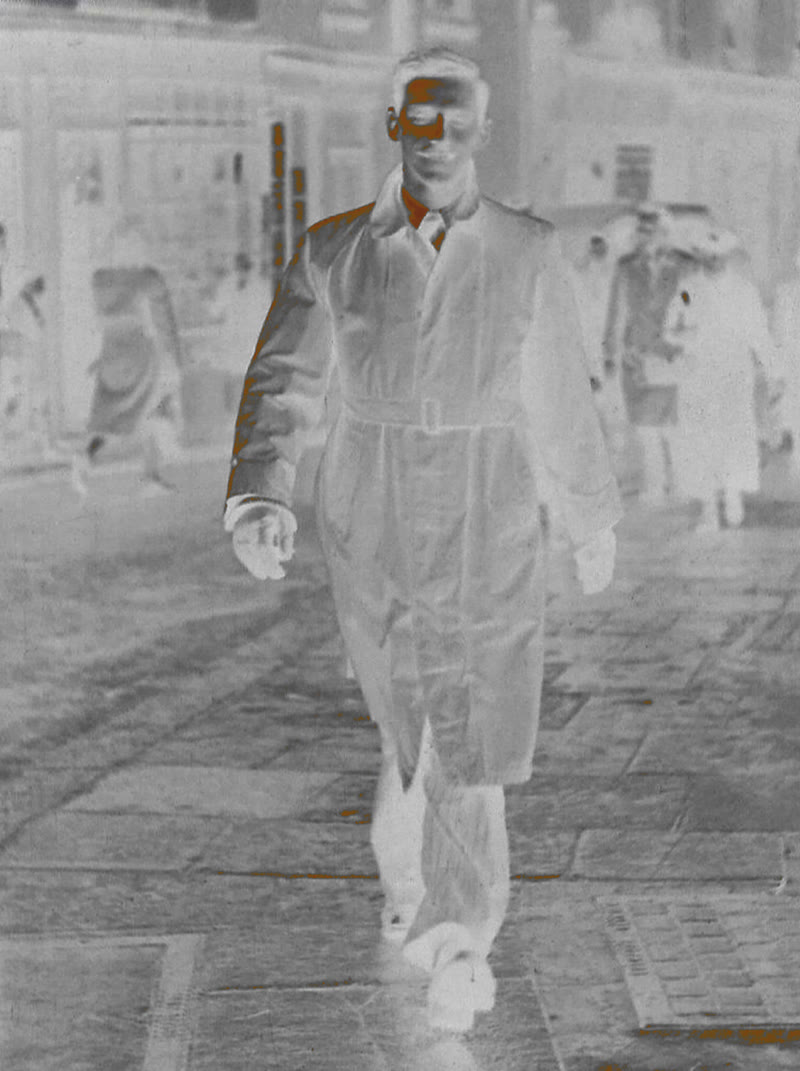
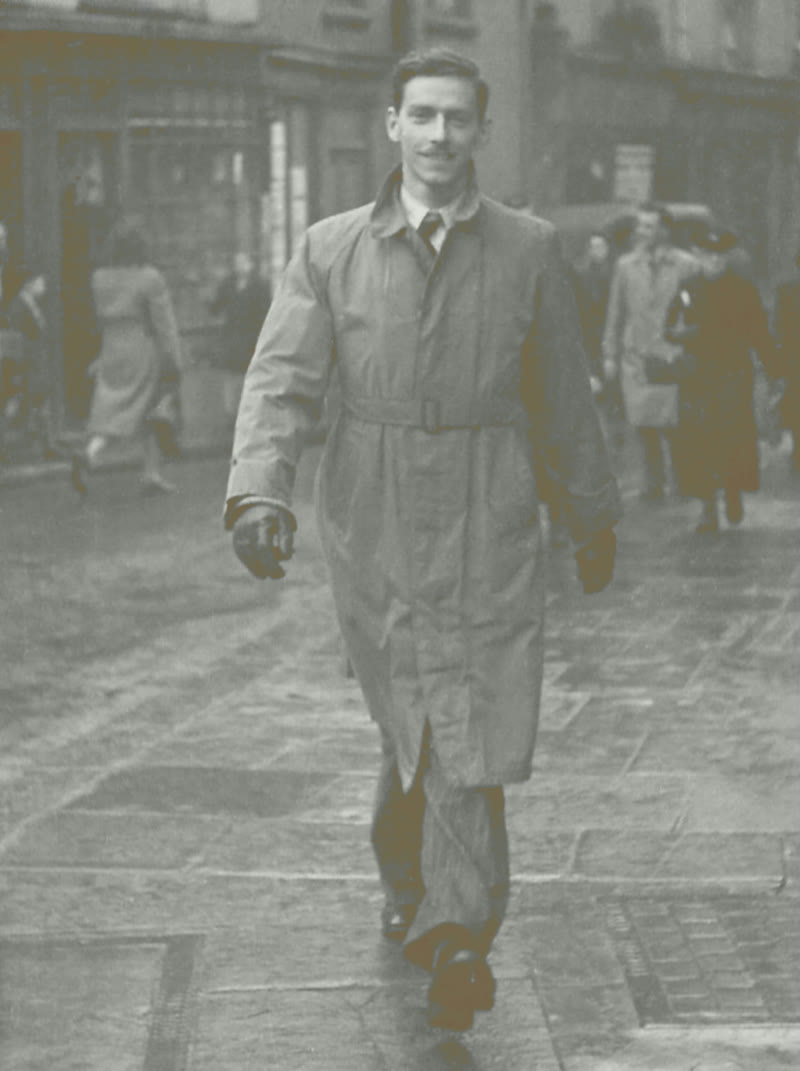
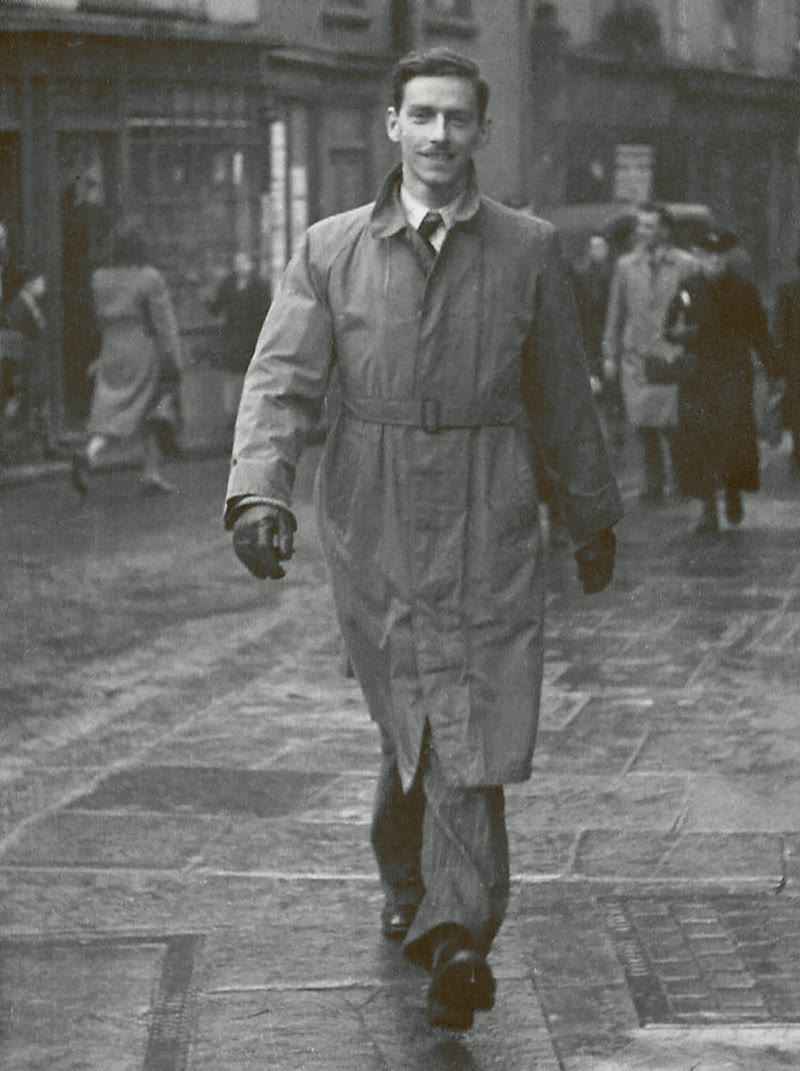
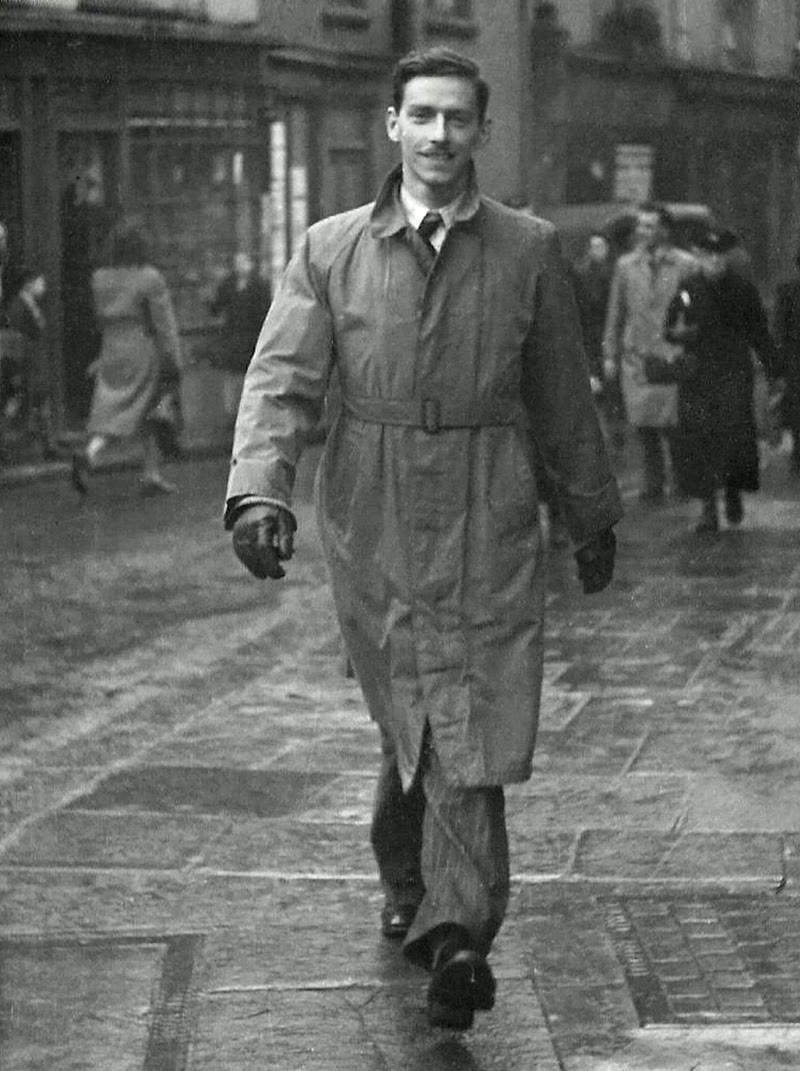
From negative to archive master: the four correction stages on one frame
Step 4: Rescue the image — scanning and colour correction
Digitisation does not cure vinegar syndrome, but it takes the picture out of the race. Once the image is captured as a digital file, further decay of the base no longer threatens it. To do this successfully on medium format, the equipment must resolve the maximum detail before the film degrades further.
We rely on the Nikon Super Coolscan 9000 ED, a dedicated professional film scanner. Using the USAF-1951 resolution target, this machine achieves a measured 3,900 of its stated 4,000 dpi optical resolution. When we scan a standard 6×6 frame (56×56 mm) at 4,000 dpi, it generates a massive 77.8-megapixel file. This high resolution captures the precise grain structure and every salvageable detail from the failing emulsion.
Our operational rule is to scan once at full resolution, and then correct the colour from the digital scan. Subjecting fragile acetate film to repeated scanning passes risks further physical damage. When you use a professional negative scanning service, the digital rescue involves reversing the dye fading and colour casts that accumulate in ageing colour negatives.
Colour negatives vs black-and-white
Treating the digital files requires distinct approaches depending on the film stock. Colour (C-41) negatives feature an orange mask integrated into the film base. This mask compensates for dye impurities in the printing process. Because the cyan, magenta and yellow dyes fade at different rates as the film ages, removing this orange mask digitally requires meticulous per-channel colour correction to restore the original scene.
Silver-gelatin black-and-white negatives have no orange mask. However, they present a different scanning challenge. The automated infrared dust and scratch removal systems (Digital ICE) built into professional scanners do not work on traditional silver-gelatin B&W film. The silver grains block infrared light, so the scanner mistakes the photographic image itself for dust. These negatives require manual cleaning and careful handling before scanning to ensure a flawless digital capture.
What it costs to save a decaying medium format archive
Digitising a medium format archive is an investment in the permanent survival of your local history or family records. The price per negative falls as your order total rises, so a large archive costs less per frame. Tens of thousands of customers trust EachMoment with their irreplaceable media, reflected in our 4.7 Trustpilot rating.
| Order size | Price per Negative |
|---|---|
| Base Price | £0.89 |
| Tier 2 | £0.80 |
| Tier 3 | £0.76 |
| Tier 4 | £0.71 |
| Tier 5 | £0.62 |
| Tier 6 | £0.53 |
| Maximum Volume Tier | £0.45 |
We supply a highly secure, prepaid Memory Box for you to pack your collection. If you return the Memory Box to us within 21 days, you receive a 10% early bird discount on your entire order. If your negatives require intensive digital restoration beyond standard colour correction, we offer an advanced AI enhancement add-on at £4.99 per item. To begin saving your collection, send your negatives to our lab.

When to act now and when you can wait
Understanding whether old negatives are still recoverable depends entirely on their current state of decay. Use the A-D Strip scale to dictate your timeline:
- A-D Level 0: You can wait. Keep the negatives at 18 °C or below, at 30–50% RH. Re-test periodically.
- A-D Level 1: Isolate the affected rolls immediately and plan to digitise them soon, before they reach the autocatalytic point.
- A-D Level 1.5: Act now. At the autocatalytic point the decay speeds itself up. Digitise without delay; if the originals must be kept long term, archives move film at this level into cold storage.
- A-D Level 2–3: Immediate lab intervention is required. The film is already physically distorted and highly brittle.
Frequently asked questions
Can vinegar syndrome be reversed?
No. The chemical breakdown of the cellulose-acetate base is a one-way process. You can only halt the acceleration by lowering the temperature and humidity, and rescue the images by digitising them at full resolution before physical failure occurs.
Is it safe to keep vinegar-smelling negatives with my photos?
No. The acidic vapour released by decaying negatives accelerates the decay of nearby acetate film and attacks paper enclosures and prints stored alongside them. You must isolate them immediately.
Should I freeze my negatives?
Freezing slows chemical decay dramatically, but placing unconditioned film into a domestic freezer risks condensation forming on the emulsion when the film is taken out and warms up. Film must be conditioned to a specific humidity and vacuum-sealed before freezing, Done properly (conditioned, double-bagged, and left to reach room temperature before the bag is opened), freezing is a recognised way to buy time for film at A-D 1.5 or above.
Can 620 negatives be scanned like 120?
Yes. The physical film inside a 620 roll is exactly the same 61 mm width and acetate base as 120 film. The only difference is the spool size they were originally wound on. We scan both formats using the exact same professional carriers and Nikon Super Coolscan 9000 ED hardware.
Will colour correction bring back faded colours?
Partly. Our technicians use the data captured in the 77.8-megapixel scan to rebalance the cyan, magenta, and yellow channels. While the physical dyes on the negative have faded permanently, correction removes colour casts and restores believable, balanced colour. Dye detail that has completely gone cannot be recreated, which is why scanning early matters.
How do I send negatives to EachMoment?
You place an order for our secure, prepaid Memory Box. Once it arrives, you pack your 120 and 620 negatives inside and send it directly to our UK lab by post. We process the film, perform the digitisation, and return your original negatives alongside your pristine digital files.
Ready to rescue your medium format negatives?
Order a Memory Box, pack your 120 and 620 negatives, post it to our lab, and we handle the rest.
Order your negative scans →

