
VHS to DVD in 2026: When Your Mum Still Wants a Disc She Can Put in the Player
 Maria C
VHS to DVD in 2026 is a specialist lab job that costs around £13.49 a disc when done properly — broadcast deck, frame-store time-base corrector, 10-bit master file, then an MPEG-2 encode that fits the recorded length without visible blocking. The reason this article exists is that the Google top five for "VHS to DVD" are all checkout pages — ASDA, MediaFix, Digital Converters, Max Spielmann, Snappy Snaps — and not one of them tells you what actually happens between you posting the tape and your mum putting the disc in her player. Below is what a modern specialist lab does, the numbers we charge, the kit we use, and what the cheap end of the market quietly cuts to hit £5.99.
Key takeaways
- Honest UK price: EachMoment charges £13.49 per finished DVD-R in 2026, dropping to £8.09 at archive volumes. MediaFix's "from £5.99" only applies if you send 51 or more tapes; the 1–3 tape price is £10.99 + postage.
- One tape does not always equal one disc. A 4-hour LP-mode tape needs a lower bitrate to fit on a single 4.7 GB DVD-R — below 4 Mbps, MPEG-2 blocking is visible on any TV. We split long tapes across two discs by default.
- The deck matters more than the encoder. A consumer VCR + £30 USB dongle produces chroma bleed and time-base jitter that cannot be removed in post. A Panasonic AG-1980P with a DPS Reality TBC produces a stable, broadcast-grade capture from the start.
- We make a master first, then the DVD. Our 10-bit 4:2:2 capture is archived; the DVD is one export from it. You can ask for an MP4 alongside the DVD at no extra cost — it's the same source.
- Verbatim DataLifePlus DVD-R only. Burned at 4×, verified with dvdisaster against the master. Generic stock fails in 5–10 years; archival MCC dye is rated 50 years in dark storage.
- Order in 2 minutes via the Memory Box quote tool. We send a prepaid intake box; you pack the tapes; we return the discs and the MP4 master on a USB stick if you tick the box.
Why "DVD" specifically, in 2026?
Because the person who is going to watch this is 72, sat in front of a Panasonic combo unit she's had since 2008, and a USB stick is not a thing that goes in it. "Convert to digital" is the right answer for archive longevity; "convert to DVD" is the right answer for whether anyone in your family will actually press play. The two are not the same job, and the UK SERP for "vhs to dvd" makes that obvious — the buyer here is shopping for a disc, not a file. We just think she deserves the disc to look like 1994 and not like 1994 photocopied through a fax machine.
The funnel matters too. If you only want the disc, we make the disc. If, while we're at it, you'd like the same recordings as an MP4 you can stream to a smart TV or store in Google Drive, we include that for free because the master file already exists. Most other UK services charge twice — once for "DVD", once for "digital" — even though the work is the same up to the final encode.
What the cheap end of the market quietly cuts
The £5.99 tier exists. It is not a lie. It is, however, a different physical process. Here is what gets stripped out when a service's headline price falls below £10 per tape:
- No time-base correction. The cassette plays through whatever VCR survived. Head-switching noise, line jitter, and dropped frames pass straight into the capture and get baked into the DVD. Once it's encoded as MPEG-2, those defects are permanent.
- Consumer USB dongle as capture device. A typical "Easycap" or August VHS-to-USB unit samples 8-bit 4:2:0 — half the colour information of our 10-bit 4:2:2 chain. On a wedding video where the dress is supposed to be cream and the suit slate-grey, this is the difference between "yes that's mum" and "what is happening to her face".
- One-pass encode, no master. The tape goes straight from VCR to DVD recorder in real time, with no intermediate file. If the disc fails a year later (and generic DVD-Rs do), the tape has to be played again — meaning the original is worn down twice for the same job.
- Whatever DVD stock is cheapest that month. Generic CMC or RITEK dye disintegrates in less than a decade. We have seen 2017-vintage budget DVDs come into the lab with rot rings already visible.
- No menu, no chapters, no checking. "Untitled" disc menu, 2-hour single track, hope it plays. We have replayed enough returned budget discs to know that around 1 in 6 won't load on Panasonic, Samsung or LG players from 2010 onward, because the burn was below their tracking spec.
None of this is fraud. It is just a different product. If you have 51 tapes of unwatched 1990s sports highlights and want them off the shelf, the budget tier is fine. If those tapes include the only footage of your father walking your sister down the aisle, it is not.
The four stages your tape passes through in our lab
Every tape we receive goes through the same chain. The order matters: doing denoise before time-base correction smears the timing errors permanently, which is why some services' output looks soft and laggy at the same time.
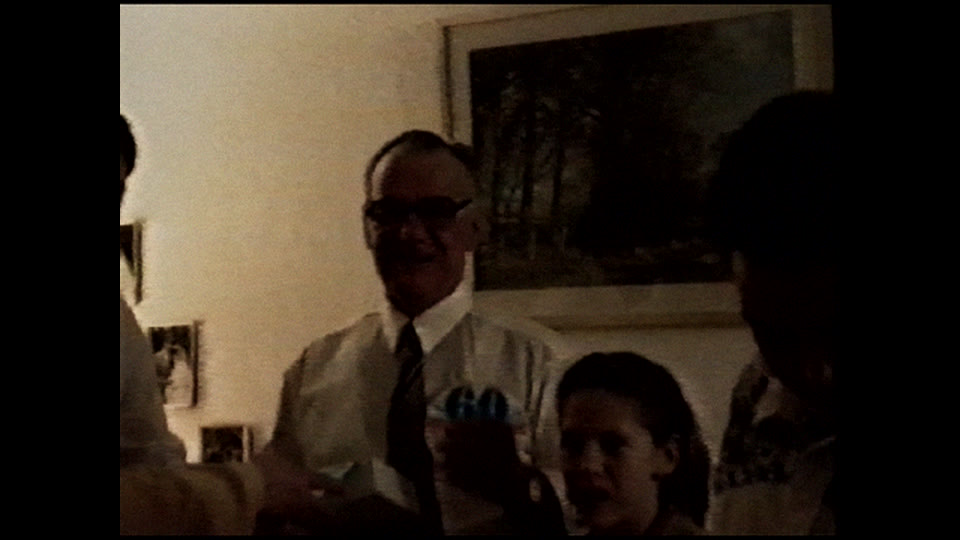
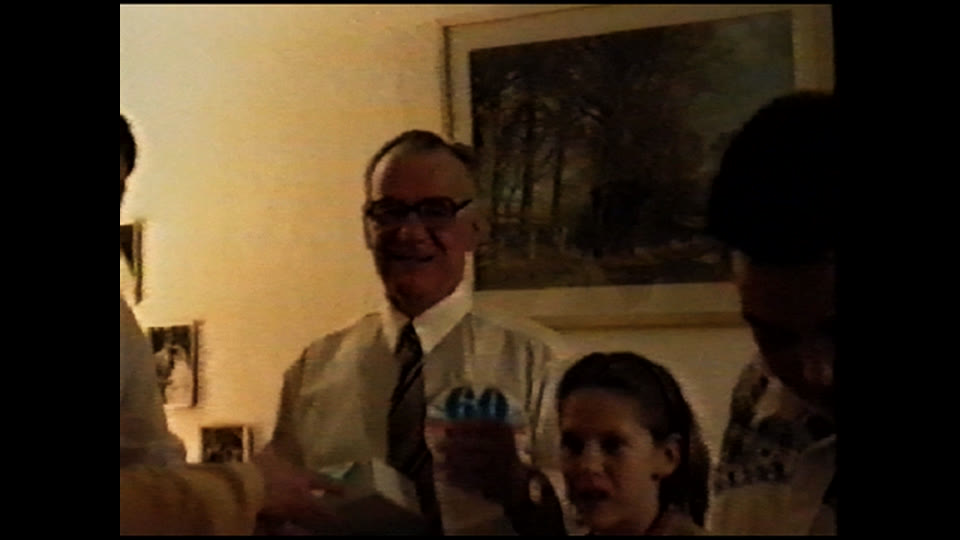
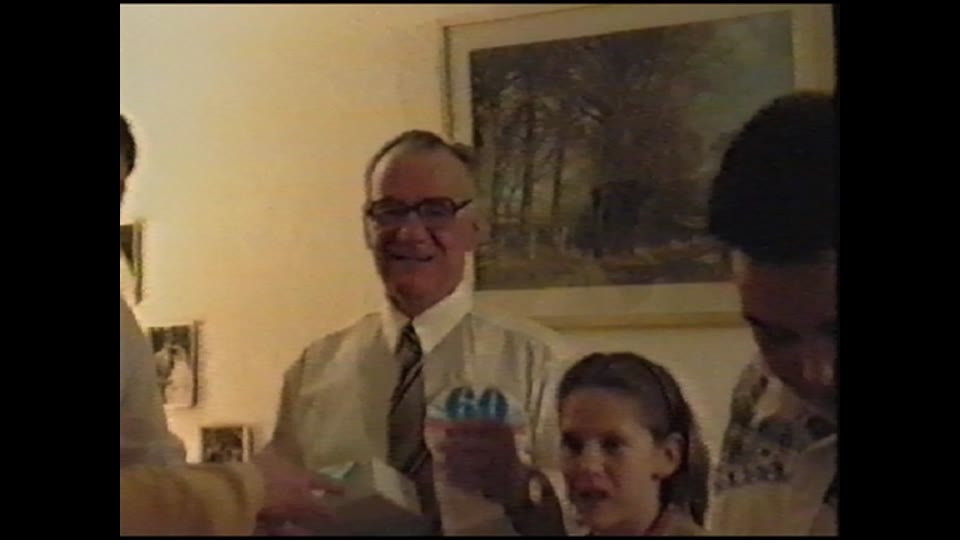
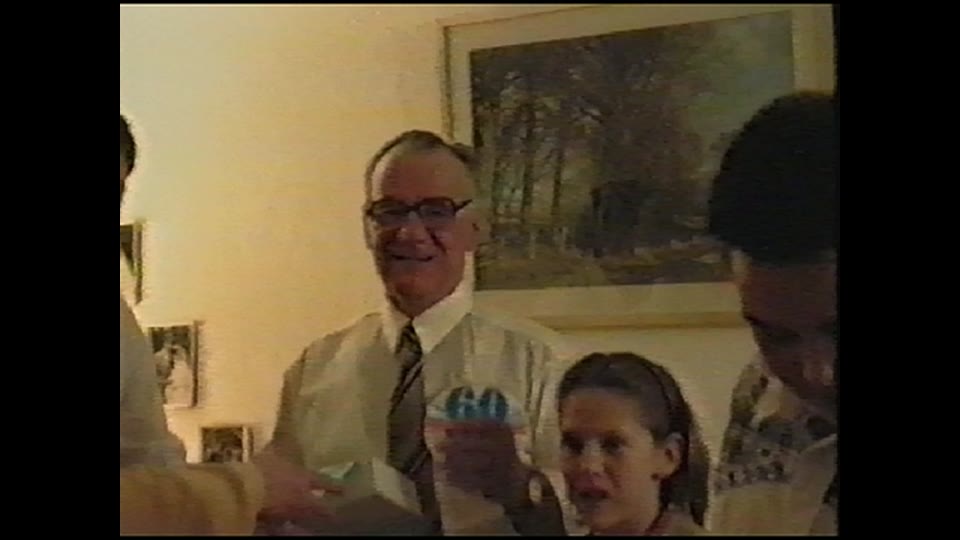
Each frame above came off the same VHS cassette at the same timestamp, with the only difference being which point of our chain we tapped it from. Stage 1 is what a £30 USB grabber would produce on its own. Stage 4 is the master file that becomes both your DVD and your MP4. The intermediate stages are where the work actually happens — and they are not optional if you want the disc to be watchable on a modern television without making everyone's eyes ache.
The kit that actually touches your tape
UK customers regularly ask "which VCR do you use?" before booking. The short answer: we maintain two professional decks in active service, plus a frame-store TBC and a broadcast capture card. None of these are available on Amazon; all of them were industry standard for broadcast TV through the late 1990s, which is why they out-perform a 2024 consumer VCR by such a margin.
Panasonic AG-1980P
Primary VHS / S-VHS deck
Built 1995–2003, ours serviced 2024
- Built-in line time-base corrector (TBC)
- Built-in digital noise reduction (DNR)
- Separate Y/C output (S-Video) for chroma isolation
- Considered the industry-standard pro VCR for archive work
JVC BR-S925E
Backup S-VHS / playback for awkward EP-mode tapes
Broadcast deck, built 1996
- Frame-accurate playback control
- Tracking precision well beyond consumer VCRs
- Handles long-play (EP) recordings that home decks mis-track
DPS Reality TBC
Frame-store time-base corrector
Discrete external unit, in the signal path before capture
- Full-frame TBC (the AG-1980 has line TBC only)
- Removes the head-switching jitter that crashes consumer DVD recorders
- Eliminates Macrovision-style copy-protection false triggers
Blackmagic DeckLink
Capture card — uncompressed 10-bit 4:2:2
- SDI / component capture, no consumer USB compromises
- 10-bit colour depth (vs 8-bit on every USB dongle on Amazon)
- 4:2:2 chroma sampling preserves the colour detail VHS already has
- The capture is the master; DVDs and MP4s are exports from this
DVD authoring chain (DVDStyler + ffmpeg)
Builds the disc your mum's player actually plays
- MPEG-2 encode at the highest bitrate the disc geometry allows
- PAL 720×576, 25fps, interlaced — matches what UK DVD players expect
- Chapter markers every 5 minutes so she can skip to her bit
- Disc menu with the date / title she gave us — not 'Untitled'
Verbatim DataLifePlus archival DVD-R
The disc itself
- MCC-grade dye, written at 4x for stability
- Verified after burn via dvdisaster against the master
- Rated archival life ~50 years in dark, room-temperature storage
- We refuse to write to dual-layer or generic stock at any price
If a service won't name its equipment, you are looking at a JVC HR-D480 or similar consumer deck plus a USB dongle. That is fine for "I want to see what's on this tape one time before I throw it out". It is not fine for a DVD you are giving your mother for Christmas.
How much VHS actually fits on one DVD
This is the question every UK customer asks once they realise their wedding tape runs 4 hours and 17 minutes. A single-layer DVD-R holds 4.7 GB. MPEG-2 video at broadcast quality eats 6.5 Mbps. The arithmetic does not lie — and the £5.99 tier hides it by silently dropping the bitrate.
Our default for the specialist lab is the 5.0 Mbps tier — 105 minutes per disc, encoded in two passes, with broadcast-grade denoise upstream. A standard SP-mode 3-hour tape lands on two discs. An LP or EP family recording that runs 6 hours lands on three or four, with chapter markers at the natural breaks ("Christmas 1993", "School play 1994", "Granddad's 70th") so your mum can skip straight to the bit she wants. If a service quotes you "one tape = one disc" without asking how long your tapes run, they are quietly going to encode below 4 Mbps and bank that you won't notice.
What we do that the BFI also does
The British Film Institute's preservation guidelines for VHS-era home video are explicit: capture must be 10-bit, time-base correction must be applied at playback, and a high-quality master file must be retained so that future re-encodes do not compound losses. They are talking about national archive material. We apply the same standard to a 1988 christening tape because the cassette is a one-off either way — there is no second copy, and if our capture is poor, the loss is permanent.
What we do not pretend is that a UK consumer DVD lab is the BFI. We are not. We are, however, the only UK consumer service we know of where the capture chain matches archive-grade specification. The disc your mum receives is encoded down from a file the BFI would accept as the master.
The walkthrough: tape on your shelf to disc in your mum's player
- Get a Memory Box. Order via the quote tool — you pick the number of tapes, we ship a sturdy prepaid box to your address. Free in the UK.
- Pack the tapes. Put any labels or notes inside the box. If you can write the recipient's name and the rough date range on a Post-it, do; the disc menu will reflect it.
- Post it back. The Memory Box's return label is prepaid Royal Mail Tracked 48. Drop it at any Post Office or arrange free collection from your door.
- We capture each tape on the AG-1980P + TBC chain. Every reel gets a fresh head-clean before playback. We log dropouts and rewind anywhere we suspect crinkle damage.
- 10-bit 4:2:2 master is archived. This becomes the source of every export. You own it; we keep a verified copy for 30 days after delivery in case anything needs re-cutting.
- MPEG-2 encode + DVD authoring. Two-pass at 5.0–6.5 Mbps depending on length. Chapter markers every 5 minutes. Disc menu with your supplied title; we never ship "Untitled".
- Burn to Verbatim DataLifePlus DVD-R, verify against master, label each disc. Discs are physically printed (not stickered) so the label cannot lift and jam a player.
- Return delivery with MP4 master on USB if requested. Royal Mail Special Delivery; signed for. Original tapes come back in the same box.
Turnaround is 2–4 weeks during quiet months, 3–5 weeks in November when half the UK realises Christmas is coming. Tapes ordered before 22 November are guaranteed back before 23 December.
When NOT to use a service like ours
Honesty is part of the pitch. If your tape is a copy of a commercial film — a Disney VHS, a rented Blockbuster tape — we will not convert it. UK copyright law makes private copies of personal recordings legal; it does not cover redistributing studio releases, and any specialist lab that converts your Snow White VHS is opening you up to a copyright claim. We refuse those tapes at intake and explain why.
If your tape has thick visible mould that smells, it is also worth knowing the cleaning step is paid separately. We do not charge a premium for normal head-cleaning, but we do charge for full mechanical disassembly and tape-path cleaning, which is rarely under £25 per cassette. The good news: we will quote that before we start, not after we have made a worse mess of your wedding video.
FAQ
Why is converting VHS to DVD cheaper at some places than others?
Because the work is genuinely different. A £5.99 service uses a consumer VCR, a USB capture dongle, no time-base correction, no master file, generic DVD-R stock, and a one-pass encode straight to disc. A £13.49 service uses a broadcast deck, a frame-store TBC, a 10-bit capture card, an archive-grade master file, archival-rated Verbatim DataLifePlus DVD-R, and a two-pass MPEG-2 encode authored with chapters and a custom menu. The price difference is the equipment, the human time, and the fact that the more expensive process can be redone from the master if anything fails — the cheaper process can't.
How many hours of VHS fit on one DVD-R?
At broadcast-quality 6.5 Mbps, about 80 minutes. At our specialist lab default of 5.0 Mbps, about 105 minutes. At long-play 4.0 Mbps, around 130 minutes — the point at which MPEG-2 compression artefacts start to be visible on any modern television. The "budget" 3.0 Mbps tier fits about 175 minutes but introduces visible blocking and mosquito noise. Most family recordings run 2–4 hours, which means a single tape usually needs two discs if you want it to look the way it did on the original cassette.
Can I get an MP4 file as well as the DVD?
Yes, at no extra cost. Because our process creates a single 10-bit master file upstream, exporting both a DVD-compatible MPEG-2 disc and an MP4 file is just two encodes of the same source. The MP4 is delivered on a USB stick by default; we can also upload it to a private Google Drive link if you'd rather. Tick "include digital copy" on the quote tool.
What about VHS-C, Betamax, Hi8, Video8, MiniDV?
All converted in the same lab on dedicated decks per format. VHS-C uses a powered adaptor in the AG-1980P; Betamax uses a Sony SL-HF1000; Hi8 / Video8 / Digital8 share the Sony EVO-9650; MiniDV uses the Panasonic AG-DV2500. More on Betamax conversion here. Pricing is the same £14.99 per tape baseline regardless of format; the DVD output adds £13.49 per disc.
My tape is snapped / mouldy / chewed. Can you still convert it?
Usually yes. A snapped tape gets a splice with archival splicing tape — visible as a single black frame at the join, but the rest of the recording survives. Mould gets a manual clean of the tape path and a chemistry step if the mould is on the oxide layer itself. Chewed tape (where the deck has eaten and crumpled it) is the hardest case; sometimes the damaged section is unrecoverable, but we'll preserve everything either side. We quote any repair separately before we start so there are no surprises.
How long will the DVD-R actually last in a drawer?
Archival-grade Verbatim DataLifePlus is rated for around 50 years in dark, room-temperature storage. Generic supermarket DVD-Rs are rated 5–10 years and frequently fail sooner. Note: this is for the disc — not for DVD players, which are no longer manufactured. Our standing recommendation is to keep the disc for whoever wants the physical object, and also keep the MP4 master somewhere cloud-redundant. Discs are sentimental; files are durable.
Is there a "VHS to DVD near me" UK option?
Yes — high-street services like Snappy Snaps, Max Spielmann and Asda Photo accept tapes in-store and use external lab partners. The trade-offs are speed and quality control. In-store dropoff is quicker but you don't see the deck your tape is played on; postal services like ours run the whole job in a single facility where you can ask which equipment captured your tape and we'll tell you. Either route works. The question to ask whichever service you choose is: "What's the bitrate of the MPEG-2 encode, and is there a time-base corrector in the capture chain?" If the answer is silence, you are paying for £5.99 work whatever the sticker says.
How do I order, and how long does it take?
Order through the EachMoment quote tool — pick your number of tapes, tick "include DVD output", and we'll ship a free Memory Box to your address within 1–2 working days. Standard processing takes 8–9 weeks from when we receive your media. Anything ordered before 22 November is back with you before 23 December, guaranteed.
The bottom line
"VHS to DVD" in 2026 is a job that can be done properly for around £13.49 a disc, or done crudely for £5.99. The difference shows up the first time your mum presses play. If you want a disc that loads on her 2008 Panasonic, plays without blocking on her 2014 LG, and is still readable when your kids inherit it, the specialist lab process described above is what that looks like. Order via the Memory Box quote tool — the prepaid box arrives within 48 hours, the discs land back on your doormat within 2–4 weeks, and the MP4 master is yours to keep as long as cloud storage exists.
