
Alfred Corry Lifeboat Museum
HeritageAlfred Corry Lifeboat Museum: Southwold's Sentinel of the Sea
The wind off the North Sea carries salt and memory in equal measure along Southwold Harbour. At the end of Ferry Road, where the River Blyth meets the Suffolk coast, a weathered wooden shed stands watch over something extraordinary — a 44-foot lifeboat that has cheated time, neglect, and the sea itself to come home. The Alfred Corry, built in 1893 and launched into some of the most treacherous waters around the British Isles, rests now in the very kind of shelter she once raced out of. Her hull still bears the lines drawn by Victorian boatbuilders. Her story belongs to Southwold, to the RNLI, and to the 47 souls who owe their lives to her crews.
A Legacy Born from Generosity
The Alfred Corry owes her existence to a man who never saw her launched. Alfred James Corry, a civil engineer from Putney, died in 1892 at the age of just 34. In his will, he bequeathed £1,500 to the Royal National Lifeboat Institution for the construction of a new lifeboat. The RNLI commissioned Beeching Brothers of Great Yarmouth to build the vessel at a cost of £490 7s 4d — the first of an improved class of Norfolk and Suffolk lifeboats, clinker-built with water ballast held in four tanks, two masts carrying dipping lug sails, and space for a crew of eighteen men. On Easter Monday, 3 April 1893, she was formally named and stationed at Southwold, ready for whatever the sea would throw at her.

Photo: Des Blenkinsopp , CC BY-SA 2.0. Source
1893 Built by Beeching Brothers of Great Yarmouth and stationed at Southwold, funded by a bequest from Alfred James Corry
1905 Coxswain Sam May and crew awarded French government medals for the rescue of the Joseph et Yvonne
1908 Moved from beach launching to a harbour slipway on the River Blyth after coastal erosion reshaped the foreshore
1915 Wartime rescues include the torpedoed SS Batoum and brigantine John — the largest single saving of life in the boat's career
1918 Decommissioned after 25 years of service, having launched 41 times and saved 47 lives
1976 Rediscovered as a derelict hulk at Maldon, Essex, and purchased by John Cragie — great-grandson of her first coxswain
1994 Presented to the newly formed Alfred Corry Charitable Trust for permanent preservation
1998 The 1922 Cromer Lifeboat Shed transported 80 miles by sea to Southwold to house the restored vessel as a museum
Twenty-Five Years on the Suffolk Coast
Three coxswains commanded the Alfred Corry across her quarter-century of active service. John Cragie, the first, helmed her through the early years until his retirement in 1898 at the age of seventy. Samuel May then took the tiller for two remarkable decades, steering the boat through her most demanding rescues and guiding her through the First World War. Charles Jarvis served as her final coxswain for the last three months before decommissioning in 1918.
It was Sam May who became most associated with the vessel. In 1905, his crew pulled the sailors of the French vessel Joseph et Yvonne from the water, an act of bravery that earned May a medal from the French government. At Christmas 1911, he led the rescue of the crew of the Beryl, for which the RNLI awarded him a certificate of service and a pair of binoculars. When war came, the Alfred Corry launched fourteen times under sail into waters stalked by U-boats, saving fifteen lives — including survivors from the SS Batoum, torpedoed on 18 July 1915, and the crew of the brigantine John in November of that year, the largest single rescue in the boat's history.
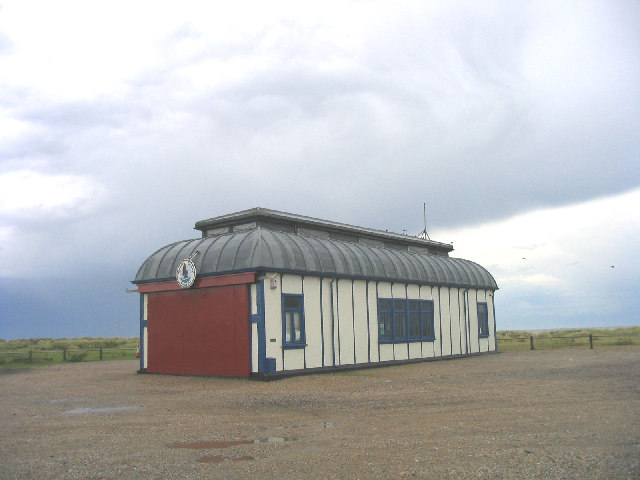
Photo: See Wikimedia Commons, See file page. Source
Lost and Found
In August 1918, the RNLI condemned the Alfred Corry. Structural weakness had taken its toll, and with repair costs estimated at £500 — more than her original build price — she was sold out of service. In March 1919, Lord Albemarle purchased the hull for just £40 and had her converted into a ketch-rigged yacht renamed Alba. She passed through several owners over the following decades, was laid up in a mud berth at West Mersea through the Second World War, and in 1949 was renamed Thorfinn and reduced to the indignity of a houseboat, drifting between moorings in Essex.
The story might have ended there, another proud vessel rotting quietly into obscurity. But in September 1972, a Southwold resident named John Goldsmith tracked the boat to Maldon in Essex, using Lloyd's Register records to confirm her identity beneath the layers of conversion and neglect. Four years later, in 1976, John Cragie — great-grandson of the lifeboat's first coxswain — purchased the derelict hulk and had her towed to the boatyard of Ian Brown Ltd at Rowhedge, Essex, where a painstaking four-year restoration programme began.

Photo: Richard Croft , CC BY-SA 2.0. Source
Homecoming
In September 1980, fully restored and proudly bearing her original name once more, the Alfred Corry sailed into Southwold Harbour for the first time in sixty-two years. Waiting on the quayside was the son of Charles Jarvis, her last coxswain — the same man who, as a boy, had watched her leave in 1918. It was one of those moments where history folds back on itself, and a community reclaims something it thought it had lost forever.
The Cragie family presented the vessel to the town to ensure her long-term preservation. In 1994, the Alfred Corry Charitable Trust was formally established, and the boat's original 1892 construction plans were obtained from the National Maritime Museum at Greenwich to guide a faithful restoration to her original RNLI configuration. In 1996, she was placed on the National Register of Historic Vessels — a recognition of her significance not just to Southwold but to British maritime heritage.
A Shed with Its Own Story
Every great museum exhibit deserves a fitting home, and the Alfred Corry found hers in an unlikely place — eighty miles up the coast. The Cromer Lifeboat Shed, built in 1922, had witnessed over a thousand lives saved during the legendary tenure of coxswain Henry George Blogg, the most decorated lifeboatman in RNLI history. When the shed became surplus to requirements at Cromer, the Trust acquired it and, on 12 April 1998, it arrived at Southwold Harbour by sea. Volunteers spent the following months re-roofing and restoring the timber structure, funded largely by the generosity of private donors. It is one of only a few remaining examples of its type from the RNLI — a piece of heritage sheltering another.

Photo: Martin Dawes , CC BY-SA 2.0. Source
What the Museum Preserves
Inside the shed, the Alfred Corry herself dominates the space — all 44 feet and 8 tons of her, her twin masts reaching towards the roof beams. Around her, the museum holds an extensive collection of artefacts connected to the lifeboat service in Southwold: photographs of crews long gone, equipment used in rescues, records of launches and lives saved, and items of local maritime history that trace the relationship between this small Suffolk town and the unpredictable North Sea. It is a collection assembled with care by volunteers, many of them with family connections to the boat and its crews stretching back generations.
The museum operates seasonally from April to October, entirely run by volunteers, and offers free admission — relying on donations to continue its conservation work. In March 2017, the Trust was re-registered as a Charitable Incorporated Organisation, ensuring the governance structure is as robust as the boat it protects.
A Living Memorial
The Alfred Corry Lifeboat Museum is more than a maritime curiosity. It is a memorial to the volunteer lifeboatmen who rowed and sailed into storms when every instinct must have told them to stay ashore. It preserves not just a vessel but the ethos of the RNLI itself — courage freely given, without expectation of reward. The boat's journey from active service through neglect, rediscovery, and restoration mirrors the way communities sometimes forget and then fiercely reclaim the things that define them.
For visitors to Southwold, the museum sits at the harbour end of Ferry Road, a short walk from the town centre. Entry is free, the welcome is warm, and the story — when you stand beside the hull and imagine eighteen men pulling oars into a gale — is unforgettable.
This article was partly inspired by old photographs and recordings that came to light when someone brought their personal memories to be digitised. It made us wonder what else is out there — in attics, shoeboxes, old cupboards — connected to the Alfred Corry Lifeboat Museum. If anyone holds old media connected to this organisation, services like EachMoment can help preserve them for future generations.