
Sheringham Museum (The Mo)
HeritageSheringham Museum (The Mo): Conserving and Celebrating a Rich Coastal Heritage
Stand on the seafront at Sheringham, where the North Sea hurls its restless energy against the shingle, and you will feel the very pulse of this Norfolk coastal town. It is a place defined by the water—by the fishermen who bravely navigated its swells, the lifeboats that plunged into its dark depths to save souls, and the Victorian holidaymakers who sought its bracing breezes. Standing as a proud sentinel over this dramatic coastline is Sheringham Museum, affectionately known as The Mo. With its striking modern architecture harmonising with the rugged seascape, the museum is far more than a repository of old objects; it is the beating heart of Sheringham’s heritage, a monumental tribute to the resilience, ingenuity, and community spirit of a quintessential English seaside town.

Photo: Colin Smith , CC BY-SA 2.0. Source
The Foundations of a Legacy
The story of Sheringham Museum is a testament to the absolute dedication of local people determined not to let their history be swallowed by the tides of time. For decades, the town’s fascinating artefacts—from maritime equipment to Victorian ephemera—were scattered, kept safe in private homes, sheds, or displayed in piecemeal fashion. The museum’s origins trace back to 1987 when it first opened in converted former fishermen's cottages tucked away behind the high street. It was a humble beginning, but it ignited a spark. As the collection grew, so too did the ambition of the Sheringham Museum Trust. They needed a home worthy of the magnificent historic lifeboats that formed the core of their maritime history.
The site chosen for this grand new vision was 'The Mo', a plot right on the seafront that once housed a prominent local residence built by the Upcher family, great historical benefactors to the town. Through tireless fundraising, community rallying, and significant grants, a striking, purpose-built facility began to rise against the skyline, designed to withstand the harsh coastal elements while protecting the delicate treasures within.

Photo: Kolforn (Kolforn) I'd appreciate if you could mail me (K, CC BY-SA 4.0. Source
1894
The Henry Ramey Upcher — A magnificent private lifeboat is built, funded by the Upcher family, destined to become a cornerstone of the town’s future museum.
1987
Humble Beginnings — The first iteration of the Sheringham Museum opens its doors in a series of converted fishermen’s cottages, born from a passionate local desire to preserve the town's narrative.
2008
Breaking Ground — Following years of meticulous planning and fundraising, construction officially begins on a visionary new, purpose-built home on the historic seafront site.
2010
A Grand Opening — The state-of-the-art Sheringham Museum at The Mo officially welcomes visitors, triumphantly uniting the town's historic lifeboats under one glorious roof.
2016
Reaching Higher — New exhibitions and a striking viewing tower expansion allow visitors to engage with sweeping panoramic vistas across the coastline and the town’s historic rooftops.
Charting the Tides of Time
The transition of the museum from a quaint collection to a modern, spectacular exhibition space mirrors the evolution of Sheringham itself. The museum meticulously charts the town's remarkable metamorphosis. For centuries, Sheringham was a rugged, hard-working fishing village, renowned far and wide for its crabs and lobsters. The arrival of the railway in 1887 was a watershed moment, abruptly transforming the quiet, isolated settlement into a fashionable Victorian and Edwardian seaside resort. The museum captures this fascinating dual identity perfectly. It does not sanitise the harsh realities of the North Sea fishermen, nor does it ignore the parasol-twirling elegance of the summer visitors. Instead, it weaves these contrasting threads into a cohesive, deeply human narrative.

Photo: Alan Reid , CC BY-SA 2.0. Source
Preserving the Soul of Sheringham
To step inside The Mo is to step into a cavernous, light-filled space where history is palpable. The undisputed stars of the collection are the historic lifeboats, proudly displayed on the ground floor. Here rests the Henry Ramey Upcher, the town’s storied private lifeboat which saved over 200 lives during its half-century of service. Alongside it are the J.C. Madge and the Foresters Centenary, magnificent wooden vessels that evoke a profound sense of awe. Standing beneath their robust, clinker-built hulls, one can almost hear the roar of the breakers and the urgent shouts of the brave local crews who risked everything to answer the call of the sea.
Yet, the museum's treasures extend far beyond its majestic fleet. Ascending through the floors, visitors discover incredibly detailed displays of Sheringham’s fishing heritage. There are traditional wooden crab pots, intricately knitted fishermen’s 'ganseys' (woollen jumpers, each bearing a unique, closely guarded local pattern used to identify the wearer should they be lost to the sea), and the rugged tools of a perilous trade.
The social history galleries offer a nostalgic plunge into the town’s Victorian and Edwardian heyday. Exquisite displays feature early bathing machines, vintage railway posters bursting with vibrant colour, and the fascinating ephemera of everyday coastal life. The museum also pays solemn tribute to the immense impact of the World Wars on this exposed stretch of coast, highlighting the courage of the local Home Guard and the sombre realities of wartime Britain on the front lines of the sea.
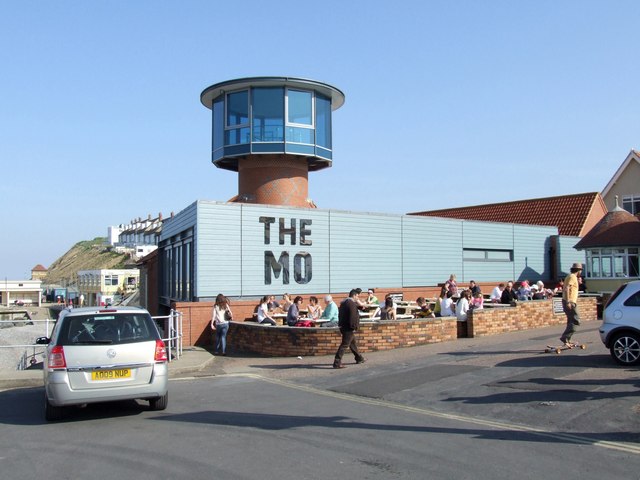
Photo: Dave Hitchborne, CC BY-SA 2.0. Source
A Beacon of Community and Remembrance
The true significance of Sheringham Museum (The Mo) lies in its profound, unbroken connection to its community. It is a museum built by the people of Sheringham, for the people of Sheringham, and generously shared with the world. It serves as a vital anchor in a rapidly changing world, ensuring that the vernacular architecture, the distinct local dialect, the traditional crafts, and the unparalleled bravery of the lifeboat crews are never forgotten. It is a place of vivid education, where school children can run their hands over the salt-stained timbers of a 19th-century boat, and a place of quiet remembrance, where the descendants of local fishermen can trace their lineage. The building itself, with its striking tower echoing the shape of a sail or a lighthouse, has become an iconic part of the Sheringham skyline—a literal and metaphorical beacon of heritage shining across the waters.
Looking to the Horizon
Today, Sheringham Museum continues to evolve, looking eagerly to the future while fiercely guarding the past. With its regular programme of temporary exhibitions, engaging community events, and an unparalleled viewing tower offering a bird’s-eye perspective of the town and the endless horizon, The Mo is a dynamic, living institution. It invites every visitor to step off the promenade and immerse themselves in the rich, salty, heroic tale of this extraordinary stretch of the North Norfolk coast. As you walk back out into the sea breeze, the town of Sheringham suddenly feels deeper, its history echoing in every crashing wave.
This article was partly inspired by old photographs and recordings that came to light when someone brought their personal memories to be digitised. It made us wonder what else is out there — in attics, shoeboxes, old cupboards — connected to Sheringham Museum (The Mo). If anyone holds old media connected to this organisation, services like EachMoment (https://www.eachmoment.co.uk) can help preserve them for future generations.